
3DPulp project: regenerating dental pulp using 3D printing
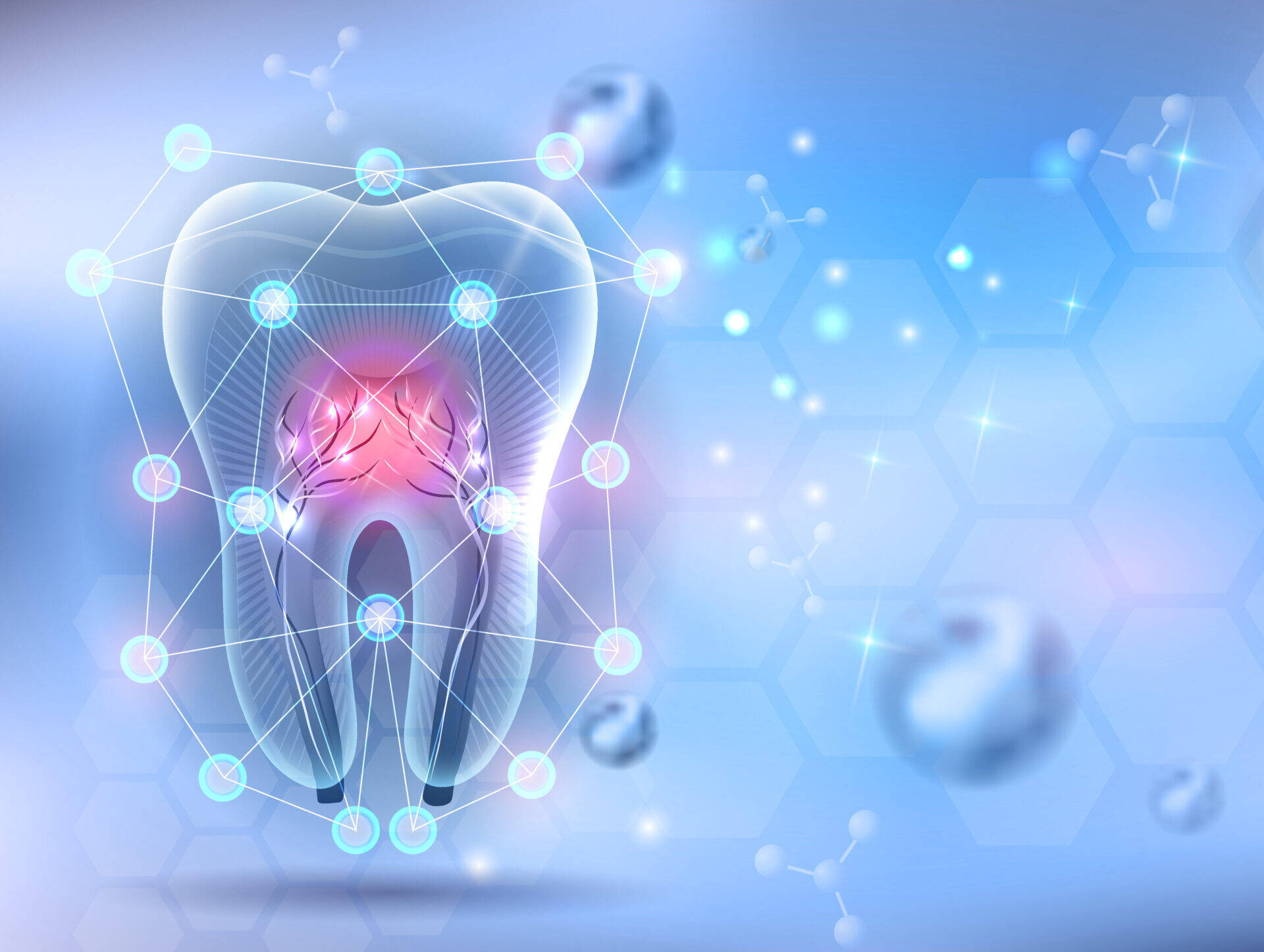
The Carnot MICA has recently funded the exploratory project 3DPulp in the field of dentistry. The objective of the research teams from the IS2M(1), the ICS(2) and the INSERM Biomaterials & Bioengineering laboratory (all members of the Carnot MICA) is to leverage 3D printing technology using two-photon polymerization (TPP) to create a medical device that promotes the regeneration of dental pulp. This inner part of the tooth contains soft tissues, nerves and blood vessels. In the event of severe pulp damage, the tooth is exposed to infections and other serious complications. The current solution consists of a root canal treatment, where the damaged pulp is removed, but this leaves the tooth vulnerable.
Complex dental structures to promote natural regeneration of dental pulp
The approach of the 3DPulp project is based on the creation of complex three-dimensional structures with exceptional resolution, enabling the natural regeneration of dental pulp. Based on the biological needs of these cells, such as pore size and the mechanical constraints of the device during its insertion into the dental canal, scientists have tested several types of architectures and photosensitive resins.
Initially, a wide variety of resins were evaluated, whether commercial or developed in the laboratory. Tests showed that TPP printing with resins such as Ormocomp, PETA or PEDGA makes it possible to create architectures with a satisfactory resolution for printing porous structures on the order of hundreds of micrometers.
The first cellular tests revealed a promising result: Kelvin-type architectures enable successful cell migration through the structure. During this project, the research teams tested an initial biodegradable resin based on urethane acrylate, opening the way to new advances. Although the current manufacturing time is not yet suitable for industrial use, 3D printing to create custom medical devices shows strong potential.
In light of these initial results, a new research and development project called “3DPulp” has been launched, bringing together the same research teams and benefiting from financial support from Carnot MICA. The future objectives are clear: to accelerate the printing process while maintaining optimal resolution and to develop biodegradable resins to facilitate the integration of the device into the body.
(1) Institute of Materials Science of Mulhouse
(2) Charles Sadron Institute