
Biochar: the future of viticulture?
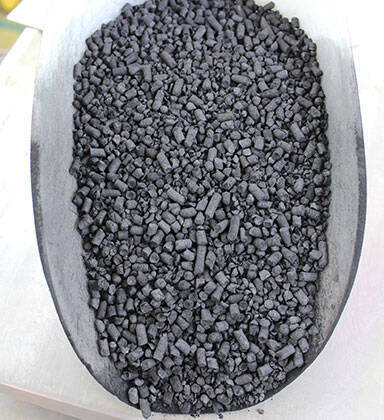
Biochar from agricultural by-products: the future of viticulture?
At a time when the ecological transition is a central global issue, new solutions are emerging to support more environmentally friendly agriculture. Researchers from IS2M, ICPEES , and RITTMO Agroenvironnement, members of the Carnot MICA Institute, are contributing answers by successfully developing high-performance biochar from viticulture by-products.
The goal: to move toward a circular economy model for more sustainable agriculture.
The Carbovit Project
Exploring the potential of valorizing viticulture by-products through biochar production for soil fertilization is a promising initiative led by Carnot MICA. But what does this innovation involve? Researchers and engineers propose recovering grape pomace (stems, seeds, and pulp) remaining after alcohol extraction during distillation. This biomass is then converted into biochar through pyrolysis. Thanks to its fertilizing properties, this biochar can be used as a soil amendment or fertilizer, helping integrate viticulture into a circular economy model.
Two Carnot MICA members are collaborating on this project. The IS2M and ICPEES laboratories, specialists in biochar derived from viticultural by-products, worked on identifying optimal processing conditions for grape pomace. The objective: produce a solid matrix suitable for enriching vineyard soils. After optimizing pyrolysis conditions, the most effective biochars were tested by researchers at CRITT RITTMO, experts in the development of fertilizing materials. The results from soil application studies have been highly promising.
The Benefits of Biochar
Biochar, for example, has a strong capacity to retain water. It helps stabilize and alkalinize soils that have become acidic due to the loss of organic matter (erosion) and repeated pesticide use. In addition, grape pomace contains key fertilizing elements that are concentrated during the pyrolysis stage. These nutrients remain bioavailable to plants, allowing some of the biochars studied to match the performance of mineral fertilizers. For all these reasons, biochar is becoming a valuable asset in crop fertilization.
Today, the results from the Carbovit project offer distilleries an alternative for processing grape pomace. They enable the integration of viticultural by-products into a local, closed-loop agricultural valorization chain.
Carnot MICA experts have demonstrated the strong potential of converting grape pomace into biochar. Further avenues are also being explored, such as the recovery of oils and gases produced during pyrolysis, which could serve as substitutes for fossil-based energy and materials. The project has led to more than ten international press releases, as well as the submission of two major projects (ANR and European). It has also generated advanced industrial partnerships in France, Spain, South Africa, and Canada.