
CO₂ Capture: Transform Rather Than Store
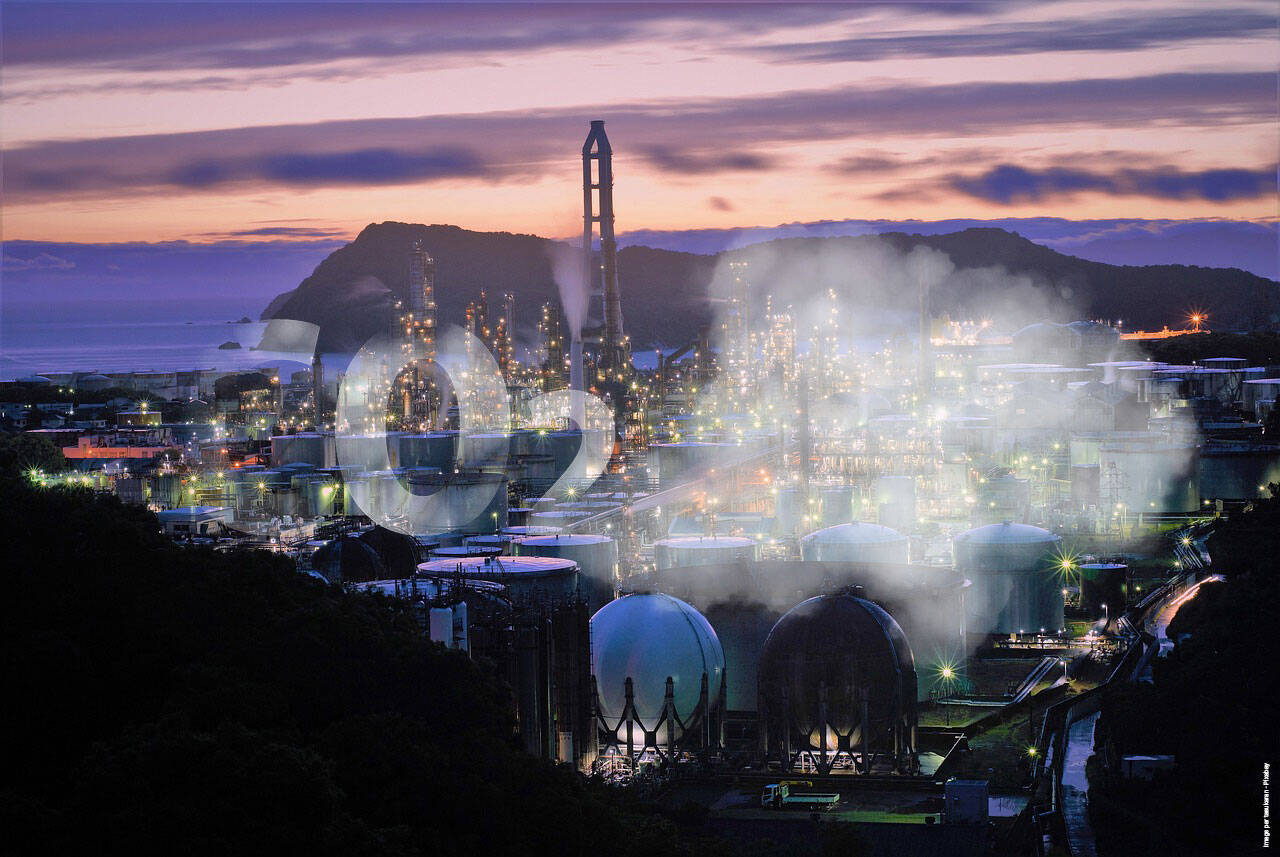
Addressing global warming presents major scientific and technological challenges. Capturing CO₂ from industrial activities is a promising pathway for reducing greenhouse gas emissions. However, developing sustainable solutions is essential, particularly as an alternative to current storage methods. Two research teams from Carnot MICA and Carnot Ingénierie@Lyon propose an innovative approach through the inter-Carnot Dynabiocat project: imagine a process that not only captures CO₂ but also converts it into an environmentally harmless substance. This is precisely the objective of researchers from Institut Charles Sadron (ICS) and LAGEPP – CPM2.
Two Complementary Technologies
Unlike traditional CO₂ capture and storage methods, which raise long-term stability concerns, the research teams propose a different strategy: encapsulating carbonic anhydrase (CA) — a key enzyme in CO₂ conversion — within a supramolecular hydrogel. The goal is to extend the enzyme’s lifespan and optimize its ability to convert CO₂ into carbonate ions. Combined with a controlled water flow, this process prevents carbonate accumulation, ensuring long-term performance. The researchers went a step further by developing a dynamic deformable-bed reactor — a breakthrough innovation in this field. This reactor enables controlled morphological variations of the catalytic packing through compression/relaxation cycles. This unique approach intensifies gas–liquid exchanges, significantly enhancing CO₂ conversion efficiency.
Collaboration between the two Carnot institutes lies at the heart of this success. By combining ICS’s expertise in catalytic hydrogels supported on polymer foams with LAGEPP’s innovation in dynamic-bed chemical reactors, the DYNABIOCAT project opens a new technological pathway in the fight against climatechange. Following completion of the Carnot project, the researchers secured ANR funding to continue their work. The potential impact of this project extends beyond CO₂ emission reduction. With possible applications in other areas — such as methane-to-methanol conversion — this research offers promising prospects for a more sustainable future.