
Innovative Solutions for Swallowing Disorders: The PASSE Project Supported by Carnot MICA
Swallowing disorders, or dysphagia, affect a large number of patients and can lead to serious complications. Often associated with degenerative neurological diseases or cancer, these conditions make everyday activities such as eating and drinking increasingly difficult. By increasing the risk of aspiration, dysphagia significantly raises the likelihood of pneumonia, contributing to substantial morbidity and mortality. Existing interventions, including tracheotomy and gastrostomy, can have a profound impact on patients’ quality of life. In response to these challenges, the PASSE project, supported by Carnot MICA, introduces unique innovations to better understand and manage swallowing disorders.
Understanding and Reproducing Swallowing through In Silico Models: Concrete Advances Enabled by 3D Printing
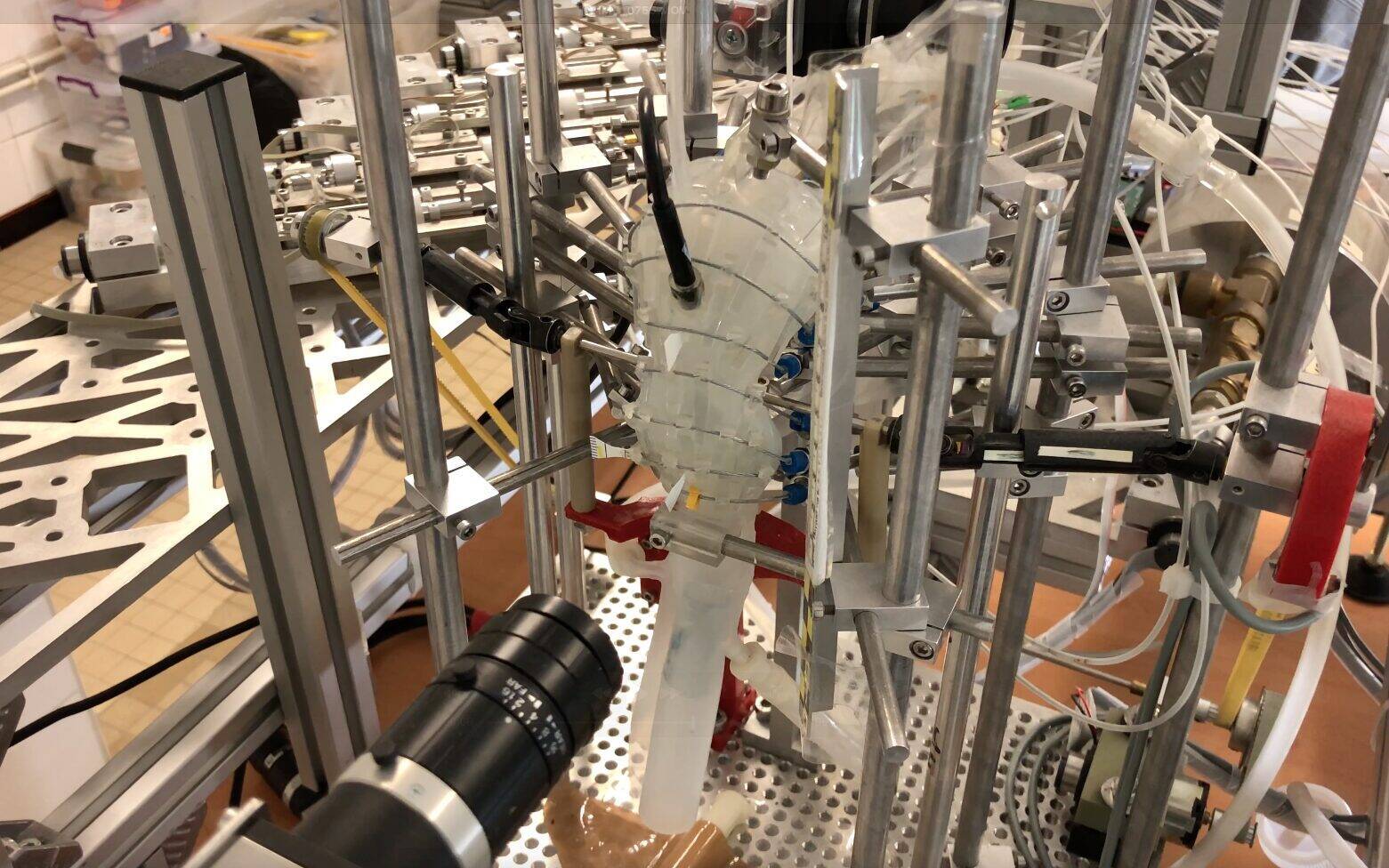
To investigate human swallowing, researchers from Biomaterials & Bioengineering (BioMat) and UBSIDE, members of Carnot MICA, have developed Swall-E, an innovative electromechanical simulator that replicates swallowing movements. The system relies on advanced computational programs to coordinate these movements ex vivo using dynamic MRI imaging. Collaboration with UBSIDE has streamlined and optimized the manufacturing of pharyngolaryngeal conduits through 3D printing, ultimately aiming to enable precise analysis of pathological movements based on calibration against a standard swallowing model.
Tailored Solutions for Patients
The project’s ultimate objective is clear: to improve the quality of life of patients with swallowing disorders by developing targeted medical devices and rehabilitation approaches (speech therapy, rheological strategies). Leveraging Swall-E and the data collected, researchers are also harnessing artificial intelligence, particularly deep learning, to automate the analysis of physiological movements and accelerate the development of personalized solutions.
An Opportunity for Industry
The PASSE project perfectly illustrates how collaborative research can address complex medical needs affecting tens of millions of people worldwide, while also creating economic opportunities. By combining proven and scalable technologies—medical imaging, customized additive manufacturing, robotics, and AI—this hybrid physical-digital simulation platform has the potential to transform the management of swallowing disorders and accelerate the market introduction of new solutions.