Catalysis is a chemical process used in more than 80% of industrial processes. It works by modifying the kinetics of a chemical reaction in the presence of a substance called a catalyst, which can accelerate the reaction without itself undergoing any alteration. This has led to numerous studies aimed at developing efficient and resistant catalysts, as well as understanding how they work.
Global demand for energy and chemicals is increasing. It is now essential for industry players to find more environmentally friendly alternatives while reducing dependence on fossil resources. In this context, the Decolipo project, funded by Carnot MICA, proposes to valorise a currently underused natural resource: lignin.
Researchers from IRCELYON and ICPEES have combined their recognised expertise in catalysis and chemical functionalisation to turn lignin into a potential bio-based precursor for the production of waterproofing materials.
Using unused lignin from the paper industry
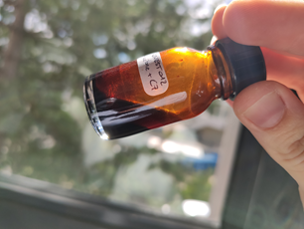
The paper industry uses lignocellulosic materials such as wood, straw, or hemp. However, only cellulose is retained and used in paper production. The remaining by-product, lignin—also known as black liquor—is currently difficult to valorise. It is mostly burned today to generate heat for production systems. Yet this material has significant potential to replace energy-intensive chemical processes, such as those used in polyurethane production.
Lignin is a carbon-rich, resistant material made of aromatic units. It is, in fact, the only abundant natural aromatic material on Earth. It also contains oxygenated functional groups that can be modified.
The goal of the Decolipo project is to control lignin depolymerisation through catalysis, meaning breaking it down into macromolecules called bio-based synthons. These synthons will then be functionalised to give them targeted properties for the development of specific materials.
An ANR project submitted with an industrial partner
The results obtained so far are very promising. The research teams have now submitted a high-impact ANR project involving several academic partners and the company SOPREMA. The objective is to find new applications for this underutilised by-product of the paper industry and ultimately develop new bio-based waterproofing materials, in order to replace polyurethane and its energy-intensive and polluting production process.