
OptimOs Project – A Major Breakthrough in Bone Regeneration
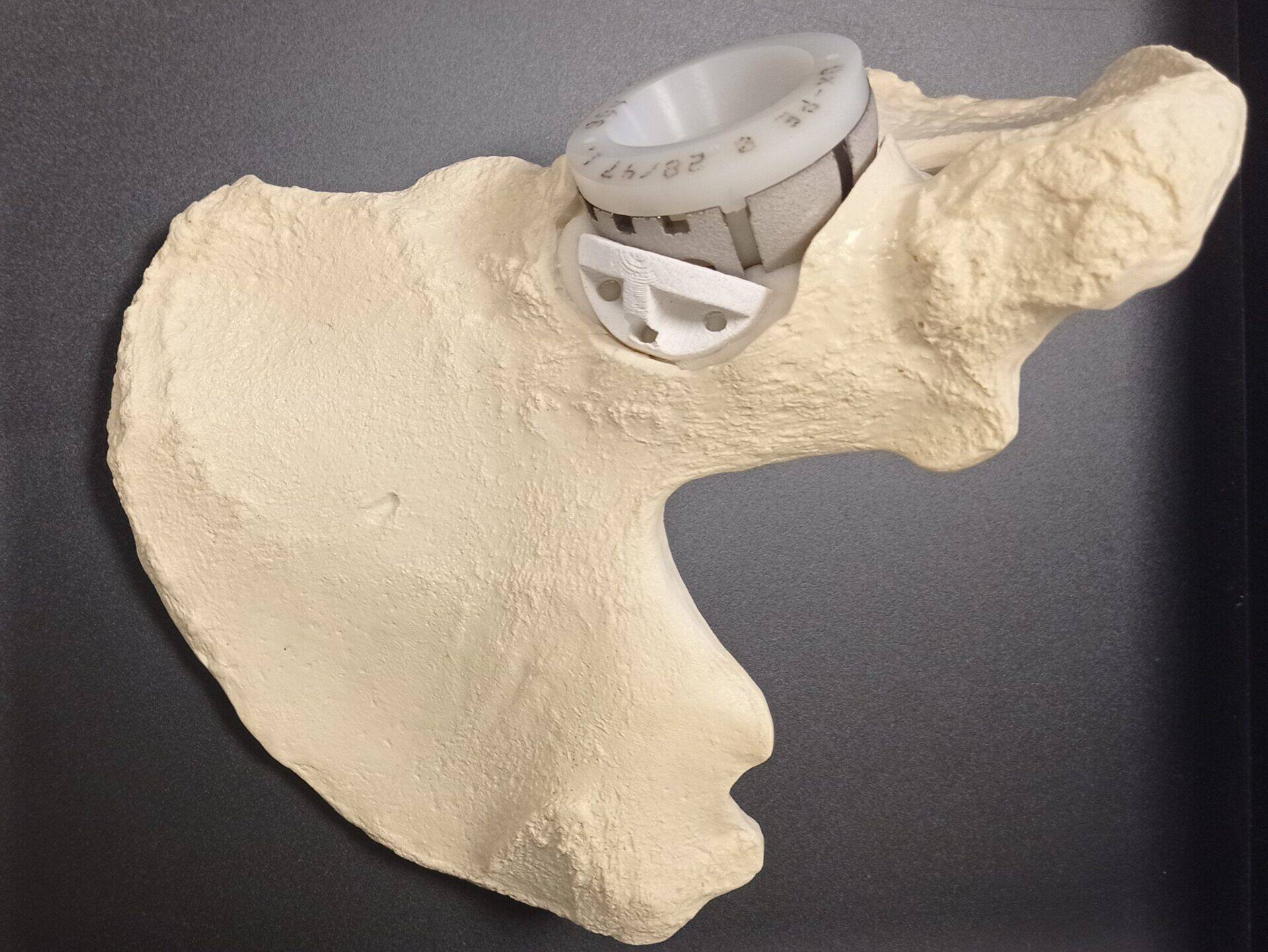
Bone tissue trauma, which requires approximately 2.2 million surgical procedures worldwide each year, represents a major challenge in terms of hospitalisation duration and associated costs. The dynamic orthobiologics market, valued at nearly USD 6 billion in 2018, highlights the growing importance of research in bone regeneration. The BiomateriOs project, launched in 2018 as part of an exploratory programme funded by Carnot MICA and bringing together the BIOS laboratory and CRITT Matériaux Innovation, established strong foundations for the design of bone substitutes using Powder Injection Moulding (PIM). By leveraging ceramics and/or bioactive glasses, this project achieved significant advances through PIM technology to produce biocompatible bone substitutes. However, several challenges remained, particularly regarding geometry and mechanical strength.
The OptimOs project aims to overcome these limitations by exploring optimised architectures for bone regeneration. The use of PIM technology, originally derived from the metallurgical industry, enabled the development of complex, porous, and biocompatible structures. A key innovation involved the incorporation of a doping agent: copper. This material has consistently demonstrated a significant reduction in inflammatory potential along with recognised antimicrobial properties. Also funded by Carnot MICA and conducted by the same research teams, the project enabled the development of an acetabular cup demonstrator meeting stringent requirements in terms of porosity, mechanical strength, biodegradability, and biocompatibility, in line with standards applied in the field of bone regeneration.
The expected added value in terms of biological performance was confirmed through controlled in vitro and in vivo models designed to monitor inflammatory response parameters. The conclusions addressed concerns related to bacterial colonisation control in potentially septic
Building on these results, the research teams led by the BIOS laboratory, within an expanded consortium, secured ANR funding for the “PIMyBone” project. This initiative aims to enhance the reliability of multi-doped materials shaped by PIM for bone regeneration by exploring innovative