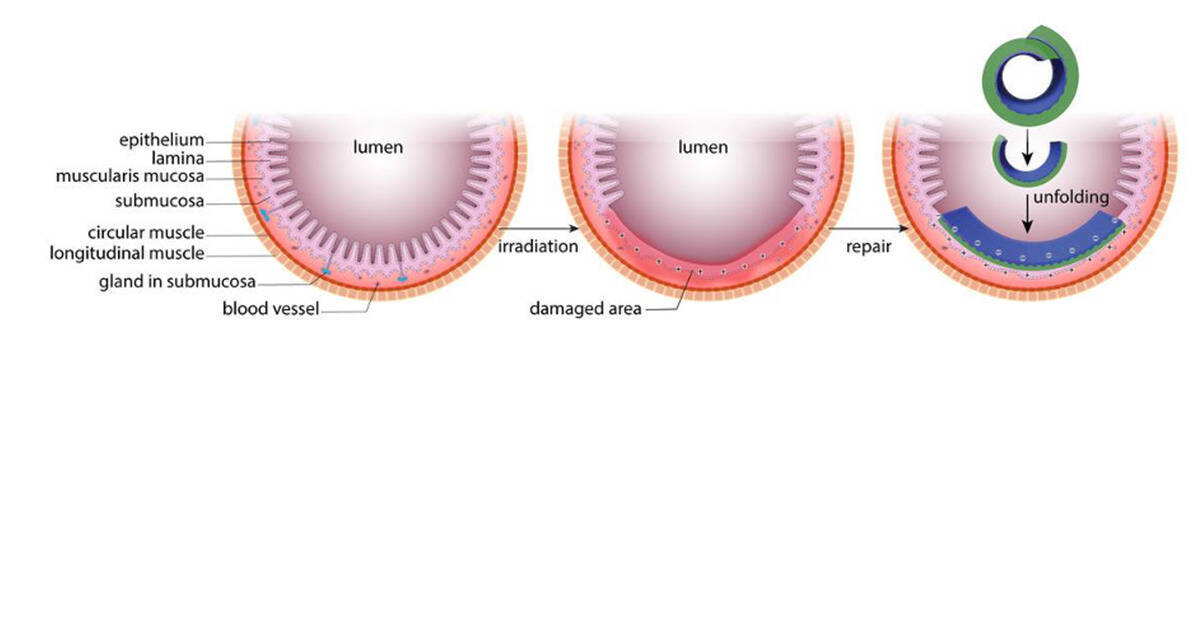
The main treatment for pelvic cancer and chronic inflammatory bowel diseases is currently radiotherapy. However, its severe side effects, such as pelvic radiation disease (intestinal inflammation and fibrosis), significantly impact patients’ long-term quality of life. As more patients achieve remission following radiotherapy treatments, there is an urgent need to develop innovative therapies to further improve their quality of life and reduce morbidity rates. At present, care relies on symptomatic treatments, with no curative option available. A biodegradable patch could be a solution.
It is in this context that the COROL project was launched, thanks to funding from Carnot MICA and Carnot Chimie Balard Cirimat. The ambitious goal of the scientific teams from IS2M (1) and IBMM (2) is to develop a biodegradable patch that could be applied locally via colonoscopy, thereby avoiding more invasive surgical procedures. It would be used to treat tissue damage in the colon caused by radiotherapy as well as chronic colon diseases.
A biodegradable and anti-inflammatory patch
This patch is composed of two layers with distinct physical properties: an elastomer layer (EL) and a hydrogel layer (HL), which enable its self-rolling behavior. These innovative materials are based on a family of newly developed photocrosslinkable degradable copolymers successfully synthesized by IBMM.
The validation of this new concept was a crucial step in the COROL project. The mechanical properties of the different layers were carefully tested, as well as their degradation potential in the presence of biological fluids. In vitro cytocompatibility tests confirmed the safety of these materials for medical use. In addition, the COROL patch can be loaded with anti-inflammatory drugs in the hydrogel layer, enabling targeted treatment of inflamed regions of the colon.
By developing an innovative self-rolling biodegradable patch that can be applied locally without surgery, COROL offers new hope for patients by improving their well-being. It represents an important step forward in regenerative medicine and medical research.
In parallel with the COROL project, and based on promising results, the research teams have submitted an ANR project (3). This funded project, titled “OPENN” (ANR-19-CE19-0022), now aims to test this patch in vivo on a living animal model that develops colonic lesions similar to those induced in patients suffering from side effects after radiotherapy.
(1) Institute of Materials Science of Mulhouse
(2) Institute of Biomolecules Max Mousseron
(3) French National Research Agency