
What if your waste became your greatest ally in the fight against CO₂?
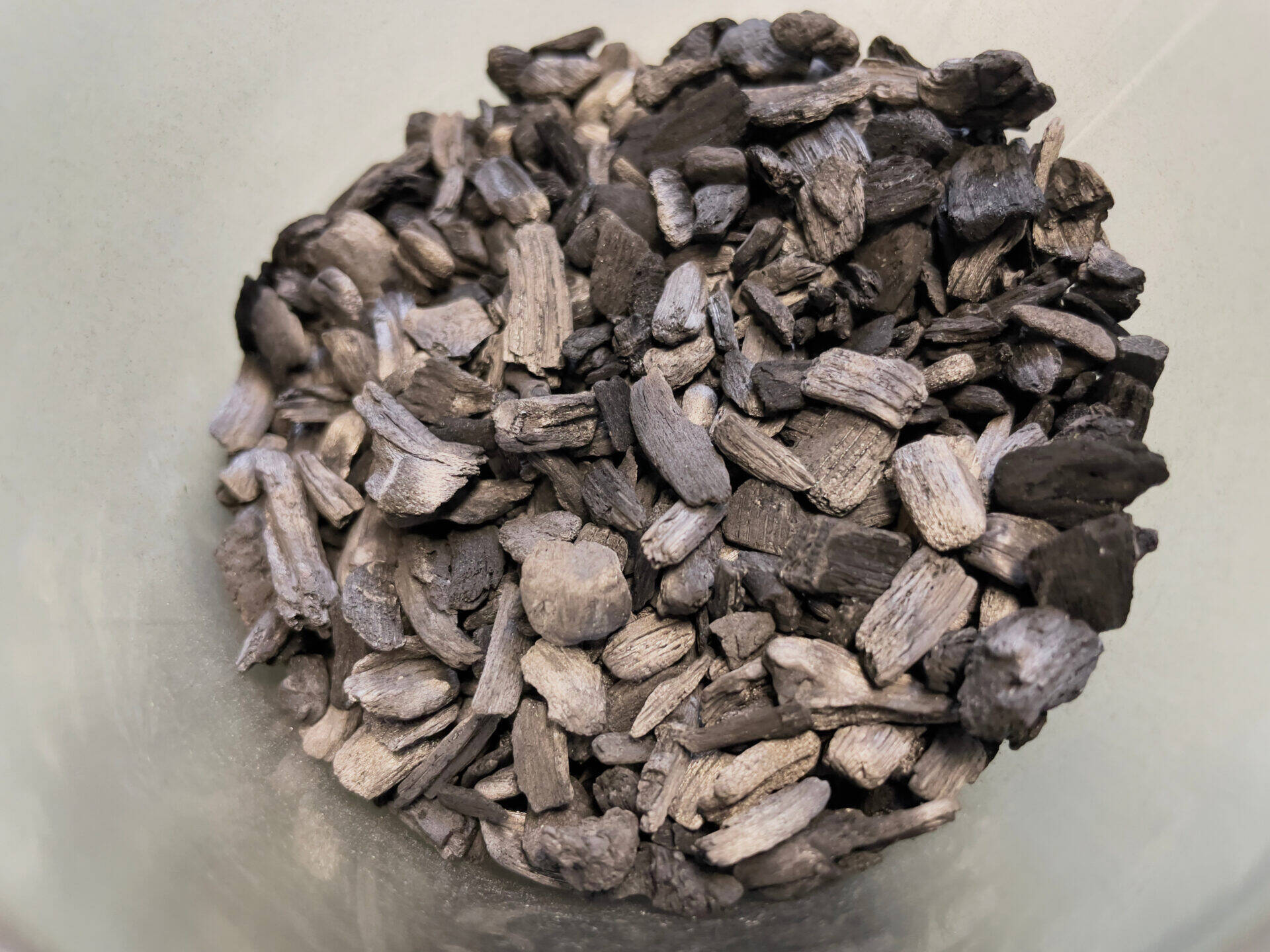
What if the answer to your CO₂ emissions were already in your waste? Supported by Carnot MICA, the BIOCAP project brings together the ICPEES laboratory, IS2M and industrial partner RITTMO to turn industrial residues — spent grain from distilleries, sludge from paper mills, digestates from methanation — into composite biochar, a solid, ultra-porous material produced by oxygen-free heating and capable of trapping CO₂ at the outlet of your processes.
The industrial challenge
Capturing CO₂ at the factory outlet is a growing challenge for industry. The solutions available remain costly, hard to integrate into existing processes, or restricted to very large installations. Faced with tightening carbon regulations, players in the cement, paper and construction sectors need solutions that are practical, accessible and economically viable.
A practical alternative to current capture solutions
The BIOCAP project answers this need directly: its solid adsorbents operate at moderate temperature (50–200 °C), solvent-free, without heavy infrastructure, and at production and operating costs well below market alternatives. At the end of their life, the adsorbents will be incorporated into sustainable construction materials (cements, bricks), giving the process a double benefit.
A turnkey process, from waste to adsorbent
The incoming waste and residues are first prepared and pre-treated. They are then converted into biochar by pyrolysis, heating at very high temperature without oxygen. The material is finally activated to maximise its adsorption capacity: its pores open up and its active sites become more accessible, making it as effective as a high-performance gas sponge. The captured CO₂ is then available for use or sequestration.
Concrete prospects for industry
The BIOCAP project is targeting cement plants, construction and paper mills as a priority. Discussions are under way with several regional and national industrial players. The aim is to offer a turnkey CO₂ capture service, based on adsorbents produced from industry’s own waste.
The next steps are to validate performance at pilot scale and to finalise the intellectual property framework ahead of a first industrial partnership.
Partners: ICPEES, IS2M and industrial partner RITTMO