
From umbilical cord to smart biomaterials: a second life for surgical waste
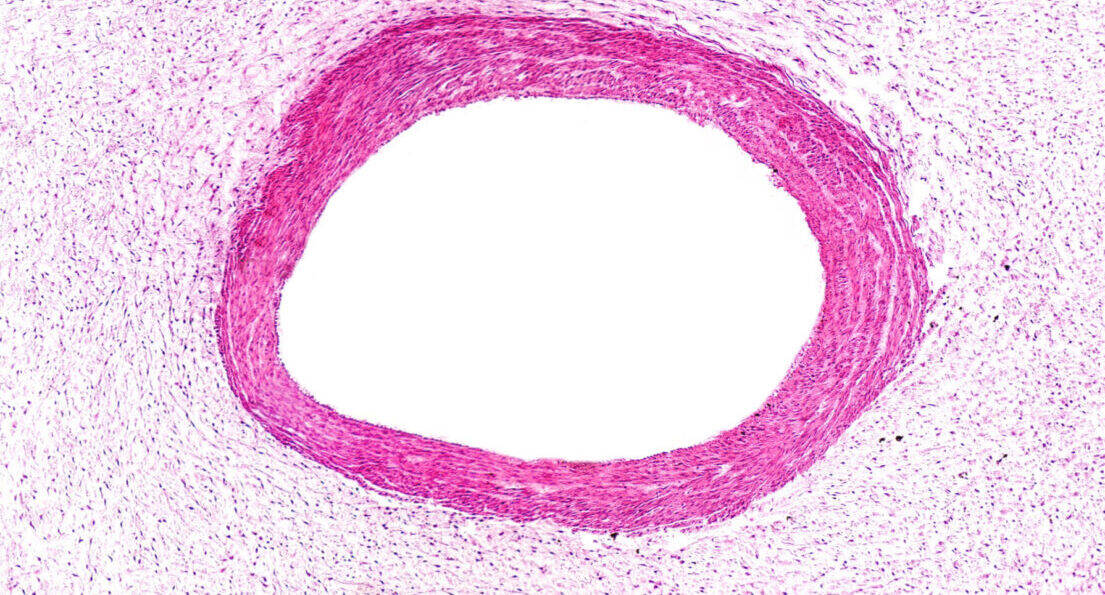
Wharton’s jelly, extracted from the umbilical cord and until now incinerated after every birth, is revealing exceptional potential to heal wounds, fight infection and open the way to 3D bioprinting of tissues.
Materials that respond, adapt and protect
The biomaterials and regenerative medicine group at the BIOS laboratory, led by Professor Halima Kerdjoudj, is working to design a new generation of multifunctional biomaterials, able to trigger the appropriate biological response to repair tissue while limiting the risk of bacterial infection, all within a sustainable development approach.
Wharton’s jelly: a biological treasure
While the use of the placenta and amniotic membranes dates back to the World Wars for treating skin burns, a neighbouring tissue long remained overlooked: the umbilical cord. Yet as early as the 1950s, cord blood was being used to treat certain leukaemias. Today, the DERIDAGE project is not concerned with the blood, but with the gelatinous substance surrounding the cord’s vessels: Wharton’s jelly.
Its physiological role is to maintain the integrity of the cord during pregnancy, to allow blood to circulate freely even as the baby moves, and to protect the vessels from compression. This is why it is exceptionally rich in collagen and hyaluronic acid: the two components of interest to the DERIDAGE project.
From cosmetic mask to medical dressing
The initial idea was to develop collagen-based masks. While this route is authorised in Europe, it is blocked in France by legislation prohibiting animal derivatives in cosmetics. Faced with this regulatory barrier, the DERIDAGE project redirected towards implantable medical devices such as active dressings. The gels developed have been validated: they recruit repair cells, reduce inflammation and promote the healing of wounds and even bone.
Next step: a printable bio-ink
The next step is to make this gel 3D-printable. The aim of the DERIDAGE project is to formulate a biological ink, shear-thinning, while preserving its two key properties. A film already exists; the task now is to adapt the formulation to allow layer-by-layer printing.
Partners: ICS, Université de Strasbourg (Dr F. Boulmedais, CNRS), LEM3 Université de Lorraine – ANR project, HyCareMat (Dr A. Baldit, UL), LCMCP Paris Sorbonne (Dr N. Nassif, CNRS)