
2023 MICA Winners of the CNRS Bronze Meda
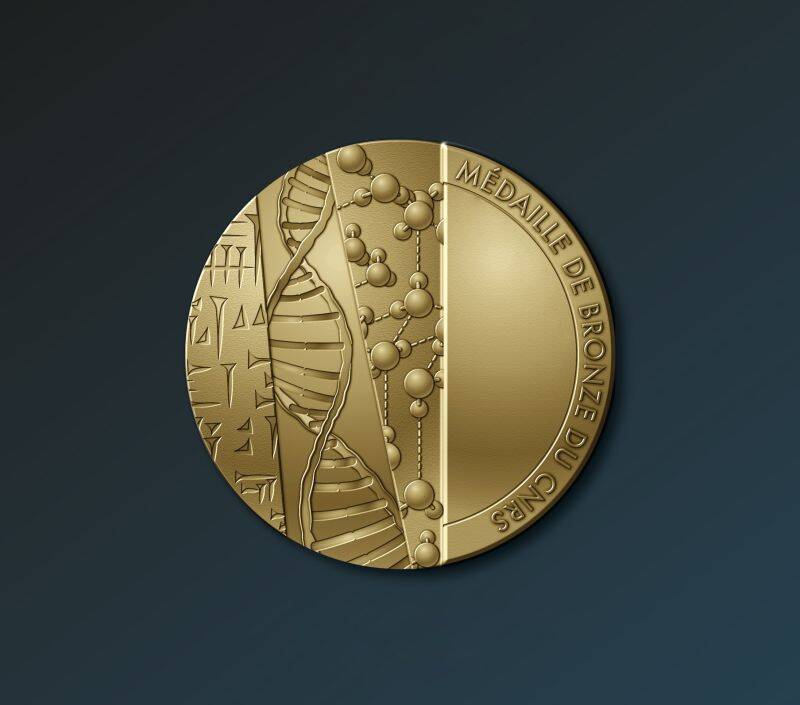
The 2023 winners of the CNRS Bronze Medal have been announced. We warmly congratulate them all, and especially Amparo Ruiz Carretero, Research Fellow at the Institut Charles Sadron – ICS, and Daniele Preziosi, Research Fellow at the Institut de Physique et de Chimie des Matériaux de Strasbourg – IPCMS, both members of the Carnot MICA network.
More Environmentally Friendly Electronic Materials
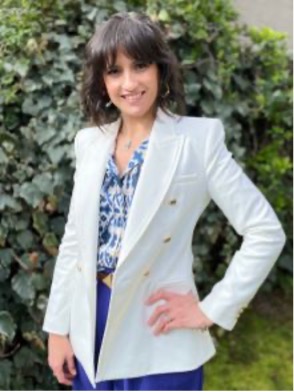
Amparo Ruiz Carretero is a Research Fellow at ICS and head of the SYCOMMOR team. This team focuses on the synthesis and study of materials for organic electronics.
After earning her PhD in Spain in 2009 and completing postdoctoral research in the Netherlands and the United States, she joined the CNRS in 2015. Her specialty is supramolecular chemistry—a field based on non-covalent, or weak, interactions between atoms within a molecule or between molecules in a larger assembly. She explores, for example, how hydrogen bonds—reversible and therefore more tunable—affect the optoelectronic properties of materials. Amparo Ruiz Carretero is thus developing supramolecular electronics, synthesizing and functionalizing semiconductor materials from organic molecules that self-assemble. One example is diketopyrrolopyrrole, known as the Ferrari red pigment. Her research even extends to spintronics, using chiral molecules to control the spin of a material, with the aim of better directing electronic charges within it. Committed to the energy transition, she seeks to improve the efficiency of components used in organic photovoltaic cells.
Exploring the Growth and Physical Properties of Complex Oxide Thin Films
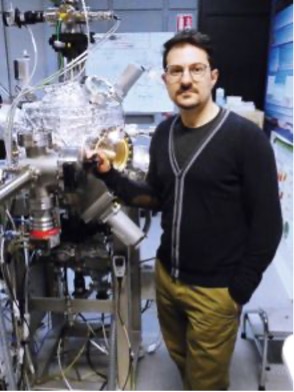
Daniele Preziosi is a Research Fellow at IPCMS. He studies the growth and physical properties of complex oxide thin films.
He obtained his PhD from the Max Planck Institute of Microstructure Physics in Germany, then completed a postdoctoral fellowship at UMPhy (CNRS–Thales) before joining IPCMS in 2017. Daniele Preziosi aims to understand and control the physical phenomena occurring in oxide heterostructures, particularly those based on nickel, where strongly correlated electrons interact with those of adjacent layers. He precisely controls the crystallographic and electronic structures of these materials through pulsed laser deposition. He then characterizes them using advanced synchrotron radiation techniques. Despite the challenges associated with the extremely small quantities of material in thin films, he investigates charge and spin distribution in relation to their superconducting properties. The ultimate goal is to use these materials to develop a new generation of efficient and energy-saving electronic components.
Congratulations on this distinction, which recognizes and encourages already promising and productive research.