3D Nanofibers: Toward Custom-Made and Sustainable Materials
A joint laboratory dedicated to electrospinning for custom-made, sustainable 3D nanofibers
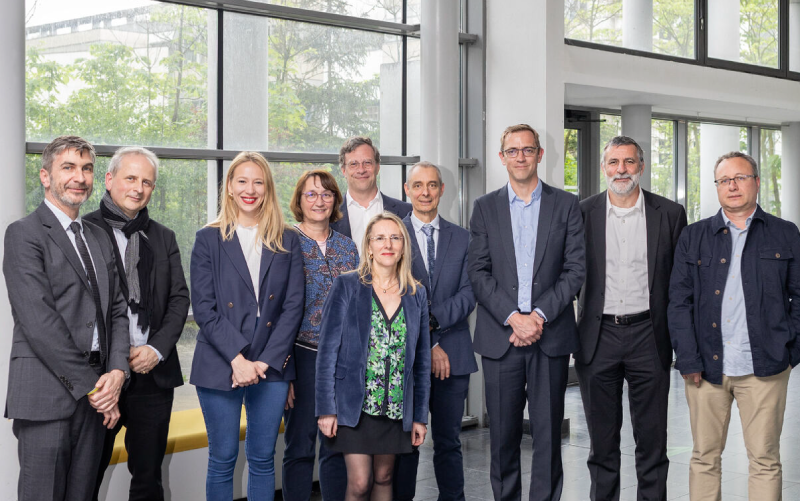
On April 15, 2024, Michelin, the CNRS, and the University of Strasbourg inaugurated SpinLab, a joint laboratory supported by Carnot MICA and dedicated to electrospinning, a key technology for the production of custom 3D nanofibers.
The result of an ambitious public-private partnership, this laboratory is exploring new avenues for creating innovative, high-performance materials for the mobility, energy, and environmental sectors.
The Institute of Chemistry and Processes for Energy, the Environment, and Health is globally recognized for its expertise in electrospinning. This process uses electrostatic forces to stretch and deposit ultra-fine fibers, one hundred to one thousand times thinner than a human hair. These fiber webs offer exceptional porosity and surface-to-volume ratios, paving the way for materials with unique properties.
For Michelin, this collaboration is part of a sustainable innovation strategy: designing composite materials that are both high-performance and environmentally friendly. In particular, researchers aim to structure the fibers in three dimensions through controlled electrostatic deposition, thereby creating a “pseudo-woven” fabric that is lightweight, durable, and eco-friendly.

Shared innovation to accelerate carbon-free mobility and applied research
Research conducted at the SpinLab joint laboratory focuses on two main areas. The first aims to understand the physical and physicochemical processes involved in fiber formation and to develop sustainable electrospinning processes using green solvents or aqueous media. The second is dedicated to creating fabrics tailored to specific applications: membranes for hydrogen mobility, industrial adhesives, or components for tires and technical seals.
The laboratory is equipped with an electrospinning platform that is unique in the world, capable of operating three parallel production lines. This custom-built facility will enable detailed analysis of fiber interactions using high-speed cameras and electric field measurement tools.
A total of €7 million in R&D investment is supporting this initiative, involving some 30 researchers, engineers, doctoral students, and postdoctoral fellows. This collaboration highlights the synergy between academic research and industry, while strengthening expertise in a cutting-edge process.
For Carnot MICA, the development of custom 3D nanofibers represents a major breakthrough at the intersection of materials chemistry, sustainable technologies, and industrial innovation. By combining scientific excellence with industrial performance, SpinLab showcases French research and prepares the materials of tomorrow for a more sustainable and efficient economy.