
Minilab: Recyclable foils tested at sea for sustainable sailing
A turning point for innovation in the boating industry
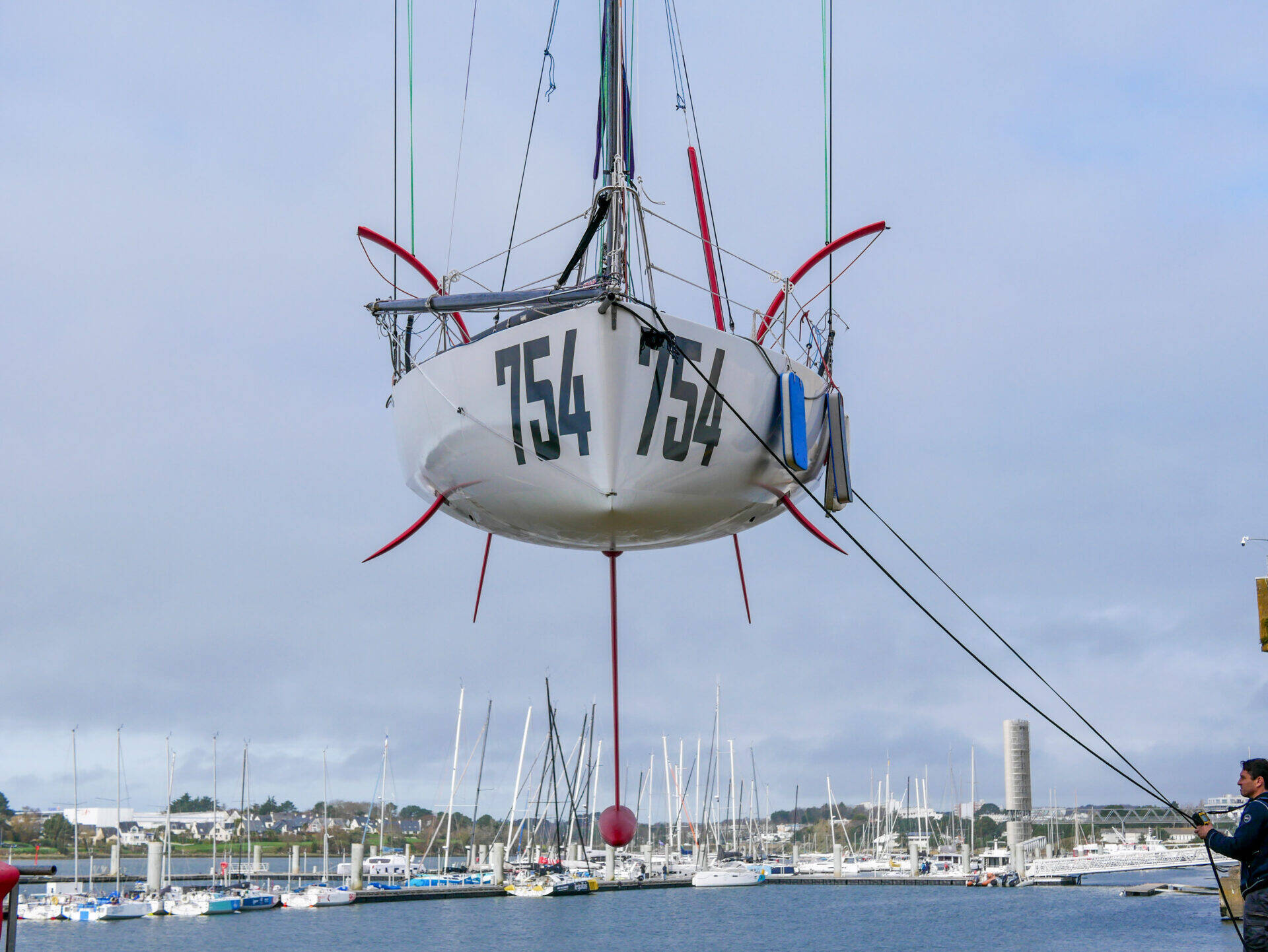
In Lorient, the Minilab project is entering a decisive phase with the launch of real-world sea trials of the first recyclable foils made from thermoplastic materials. Launched in 2023 by skipper Adrien Marchandise, Minilab aims to prove that it is possible to combine performance and sustainability in offshore racing.
“By integrating recyclable foils onto a racing boat, we are demonstrating that a more sustainable alternative is possible. These full-scale tests are essential to prove the reliability of these new technologies and convince the entire industry,” explains the project’s founder.
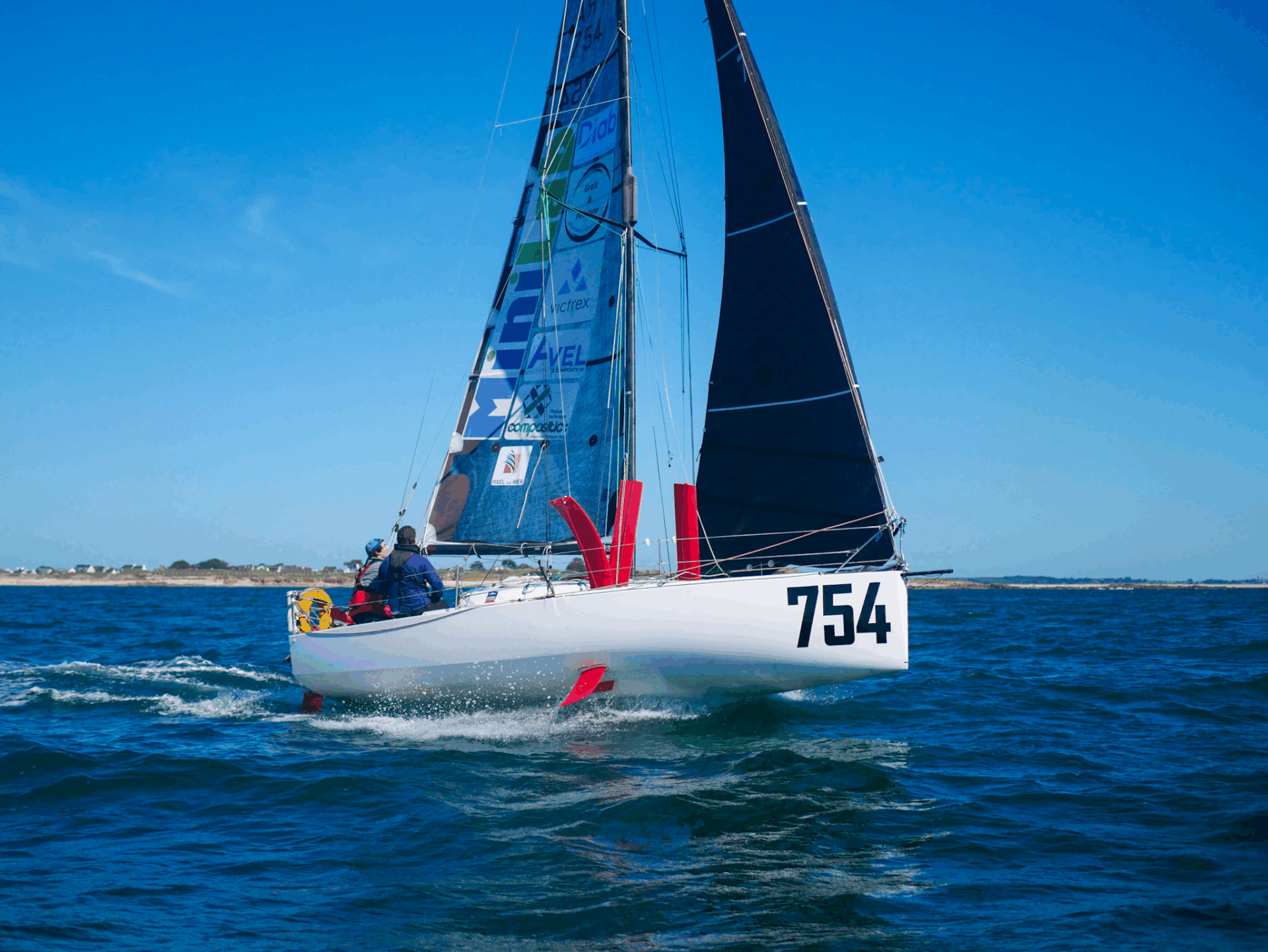
Subjected to extreme conditions, the foils tested on the Minilab lab boat will validate the robustness and performance of the materials before their participation in the 2025 Mini Transat, a 4,000-mile solo ocean race. A true catalyst for innovation, ocean racing becomes a testing ground for eco-efficient solutions applicable to other industrial sectors.
A collaborative project between research and industry
Supported by Avel Robotics, UBSIDE—a member of Carnot MICA—and the University of South Brittany, the Minilab project is part of an open collaboration between research and industry.
Funded under Carnot MICA’s Drift 1 program, it has enabled the first material tests and demonstrators to be carried out. UBSIDE and the ComposiTIC technical platform contributed their expertise in recyclable composite materials, from manufacturing to mechanical testing.
“Only through validation at sea can we observe all the simultaneous stresses to which these new foils are subjected,” emphasizes Frédéric Fourreau, CEO of UBSIDE.
Several industrial partners—Victrex, Diab, SMM Composites, and Pixel sur Mer—are contributing to the development of each component for this project: structure, core foam, machining, and onboard sensors.
Toward the 2025 Mini Transat and New Industrial Opportunities
Sea trials will help optimize the design ahead of the ultimate test: the 2025 Mini Transat, where the recyclable foils will be put to the test over 4,000 nautical miles.
Beyond competition, these innovations open up new possibilities in other fields—such as aeronautics, shipbuilding, and transportation—where lightweight and recyclable materials are key challenges.
Thanks to the expertise of UBSIDE, a member of Carnot MICA, Minilab perfectly illustrates how research and industry can join forces to accelerate the transition to eco-efficient technologies, in the service of more sustainable maritime mobility.