
4D Printing: unlocking its secrets
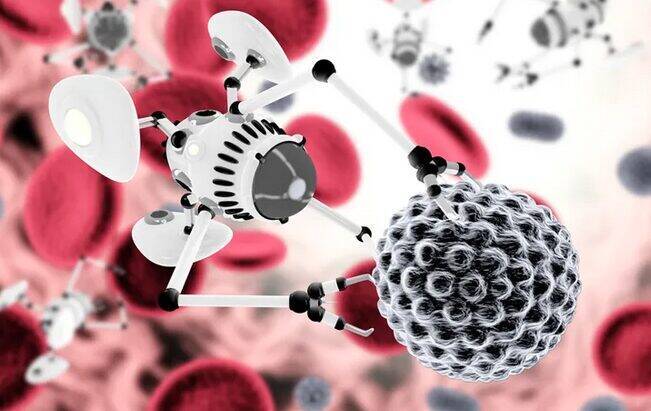
4D Printing: the ambition to unlock its secrets
4D printing is considered a technology with extremely high innovation potential. Unlike 3D printing, which produces static objects, 4D printing enables the creation of structures that can change shape or properties over time in response to external stimuli.
Driven by researchers from IS2M, Carnot MICA has supported this promising field by funding the “4DP” resource recovery project. Here is how the story unfolds.
In 2017, the Grand Est Region launched a call for projects aimed at supporting the structuring of research actors in priority fields. IS2M, a member of Carnot MICA, together with eight other laboratories* and with the support of M2A, was selected. Together, they launched at the end of 2018 the project “Programmable Information Matter for 4D Printing.” The goal was to advance scientific and technological knowledge in 4D printing. This large-scale project, funded with €3 million, was the first of its kind in France.
Designing programmable 3D objects
Researchers worked together to develop 3D objects with programmable behavior. Fabricated using different 3D printing processes, these objects are characterized using various methods depending on their nature (material type, size, functionality, etc.) and on the expertise of the participating laboratories (mechanical, optical, chemical properties, etc.).
Within this framework, the 4DP project brought together researchers from Carnot MICA and ICEEL to focus specifically on hydrogel- and liquid crystal-based 3D objects whose movements can be controlled by light, humidity, or temperature stimuli.
The results of the research, carried out through a PhD thesis awarded the “Mature your PhD” prize in June 2023, are numerous and highly promising.
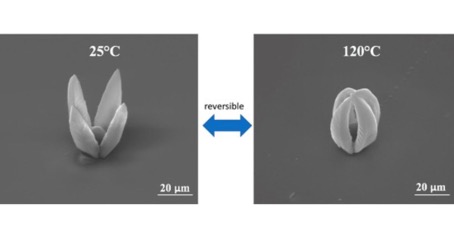
At the microscale, precise control of fabrication enables the printing of micro-actuators activated by temperature variations, with significant potential for minimally invasive microsurgery.
At the macroscale, researchers succeeded in printing composite materials (polymer matrix with metallic particles) that change color depending on humidity levels and increase in temperature under light stimulation. These results could have important applications in medical devices as well as in low-cost, low-energy sensor technologies.
Thanks to the momentum initiated by the research consortium, scientific and technological advances in 4D printing continue to progress. The ANR project “PNanoBot,” selected on 20/07/2021, builds on this dynamic and will further develop outstanding skills for the medical sector.
Institute of Thermal, Mechanical and Materials Science (ITheMM). Molecular Chemistry Institute of Reims (ICMR). Jean Lamour Institute (IJL). Reaction Engineering and Process Design Laboratory (LRGP). Charles Sadron Institute (ICS). Institute of Chemistry and Processes for Energy, Environment and Health (ICPEES). INSERM Biomaterials and Bioengineering. Institute for Research in Computer Science, Mathematics, Automation and Signal Processing (IRIMAS). Institute of Materials Science of Mulhouse (IS2M).